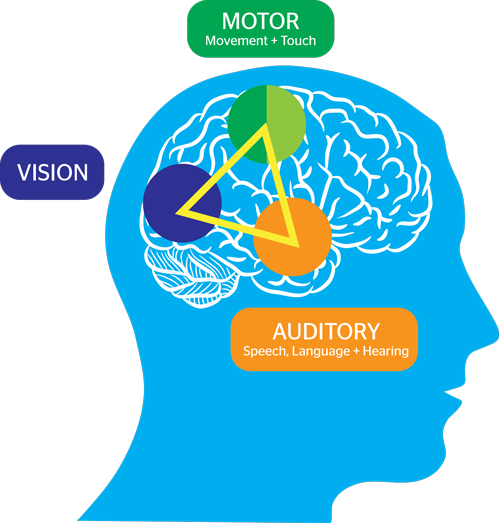
Visual therapy is a step-by-step developmental program designed to
provide patients with the necessary meaningful experiences to acquire
full use of their visual process. In many cases the visual system has a
problem with development, and the brain creates adaptations to account
for the lack of normal development. These adaptations include a turned
eye, lazy eye, and sometimes more subtle symptoms like covering or
closing an eye while reading. The goal of therapy is to jump start the
development of the visual process so these adaptations are no longer
needed. Our goal is to get the patient seeing clearly while using both
eyes as a team.
There are several options when choosing a therapy program. We offer
home-based and office based therapies, both choices include regular
checkups with Dr. Hohendorf to ensure the progress of each
patient.Following is a break down of the different programs we offer:
Vision Therapy Program option #1 includes:
2 in-office visits, one-on-one with the Vision Therapist each week for 10 weeks. (20 total visits)
1 Vision Therapy Progress Evaluation with the Doctor during the 10th session.
1 Vision Therapy Progress Evaluation with the Doctor at the conclusion of the program.
Each visit includes 45 minutes spent one-on-one with the therapist.
It is not necessary to work on Vision Therapy at home. If Home Vision
Therapy is utilized to speed up the progress it is planned and
discussed during each office visit as part of the 45 minutes. This plan
is the most convenient plan for busy families and varied schedules.
Patients benefit most effectively from this plan due to the consistent
professional guidance through the program.
Vision Therapy Program option #2 includes:
Once a week in-office 50 to 60 minute sessions.
Patient – therapist ratio is one-to-one.
In certain cases more frequent sessions may be recommended.
The frequency of treatment does not affect the overall fee.
Includes all Vision Therapy Progress Evaluations during treatment. The Doctor usually does these every
7-8 weeks of therapy
Includes the first post treatment program evaluation. This is usually done at one-month post therapy.
Each visit includes 10 to 15 minutes to teach home therapy, to be
done for 5 of the remaining 6 days until the next in-office therapy
session. This program takes time at home each day for the patient and
the family to work on Vision Therapy. Patients have the greatest
results through these programs due to the professional guidance and
consistent work at home.
There are three choices for this option: 1) General Skills Case - 21
weeks 2) Vision and Learning Case - 35 weeks 3) Strabismic and/or
Amblyopic Case - 40 weeks
Vision Therapy Program option #3 includes:
1 in-office visit one-on-one with the Vision Therapist each week for 10 weeks.
1 Vision Therapy Progress Evaluation at the conclusion of the therapy program by the Doctor.
Telephone conference support from the Vision Therapy Staff and Doctors.
Each weekly visit includes 45 minutes spent one-on-one with the
therapist and 15 minutes to teach home therapy to be done for the
remaining 6 days until the next therapy session. This program takes
time at home each day for the family and the patient to work on Vision
Therapy. Patients have very good results through this program.
Vision Therapy Program option #4 includes:
1
Home Vision Training session with the Doctor. This session is
approximately 1-1/2 hours and teaches a caregiver how to work with the
patient effectively at home as a Vision Therapist. The Doctor will
design a specialized program and will teach the procedures that pertain
to the areas of patient difficulty. A ten (10) week schedule outline is
prepared to be done 5 of 7 days a week at home.
1 Vision Therapy Progress Evaluation at the conclusion of the therapy program.
Telephone conference support from the Doctor is available.
Program #4 is the most economical program plan that the Doctor
considers effective. A strong commitment is necessary for this program
from both the patient and the family. Progress is achieved through
consistent hard work from all concerned. If this program is chosen, the
Doctor helps a patient get started and answers any questions along the
way. The Doctor realizes that if this program does not work out with
your family schedule or motivation is a problem with the patient, the
program can be discontinued and the fee can be applied to any other
program that is preferred. This program transfer must be done within
the first 21 program days.
Vision Therapy Program option #5 (option #3 with the noted exception):
1 In-office Vision Therapy session every 2 (two) weeks over a 20 week time period.
Progress depends on actual time spent each day working on Vision
Therapy at home. Each visit includes 30 minutes spent one-on-one with
Therapist and 15 minutes to teach home therapy, to be done at home
until the next in-office session. Patients need to be committed to work
each day during the two weeks in between each visit. (Good for families
who need an occasional boost to help with home therapy).
Vision Therapy Program option #6 COMPUTERIZED HOME THERAPY:
This computer program can be taken home or used on a work computer.
It is excellent for general early focus or two-eyed coordination
problems causing computer and early eyestrain. It includes instruction
on how to use the disk on a computer. Exercises are individually
programmed and the therapy is monitored on the computer disk. This
program is excellent for the self-motivated or for those without a
therapist available.
Syntonics
Syntonics is a type of ocular science which addresses the application
of specific light frequencies through the eyes. It has been utilized by
optometrists and and vision therapists within the clinical setting for
over 70 years with successful outcomes.
Areas Addressed by Syntonics:
-Brain Injuries
-Learning Disorders
-Emotional disorders
-Convergence Deficits
-Seasonal Afffect Disorder
-Strabismus (eye turns)
-Amblyopia (lazy eye)
-Attention/Focus Deficits
-Effects of Stress/Trauma
Lenses
In some cases a vision problem can be resolved with lenses alone.
Other situations need a combination of lenses and therapy. There are
two types of lenses we use in a theraputic setting. The first type is
stress relief which will allow vision to stay where it is (if fully
developed) or even improve. The second types of lense we use is a
developmental lens, this helps vision to develop more normally.The lens
option that works best for each patient will be determined at the
visual examination with Dr. Hohendorf.